Only through the extreme we reach clarity
Friedrich Schiller 1759-1805
Fluorite Quadruplet Polychromats and Fluorite Wide Field Polychromats – developed and manufactured in Germany
For visual astronomy, astrophotography, and scientific and industrial applications
Astronomical optics from Jena
APQ JENA is reviving Jena's tradition of astronomical optics and instrument engineering after a 25-year interruption.
This work draws on the expertise of scientists, designers, engineers and specialists, as well as more than a century of astronomical instrument-making tradition in Jena.
Manufacturing takes place in Jena – Made in Germany. Small-batch production also makes one-off and custom builds possible, tailored to individual customer requirements.
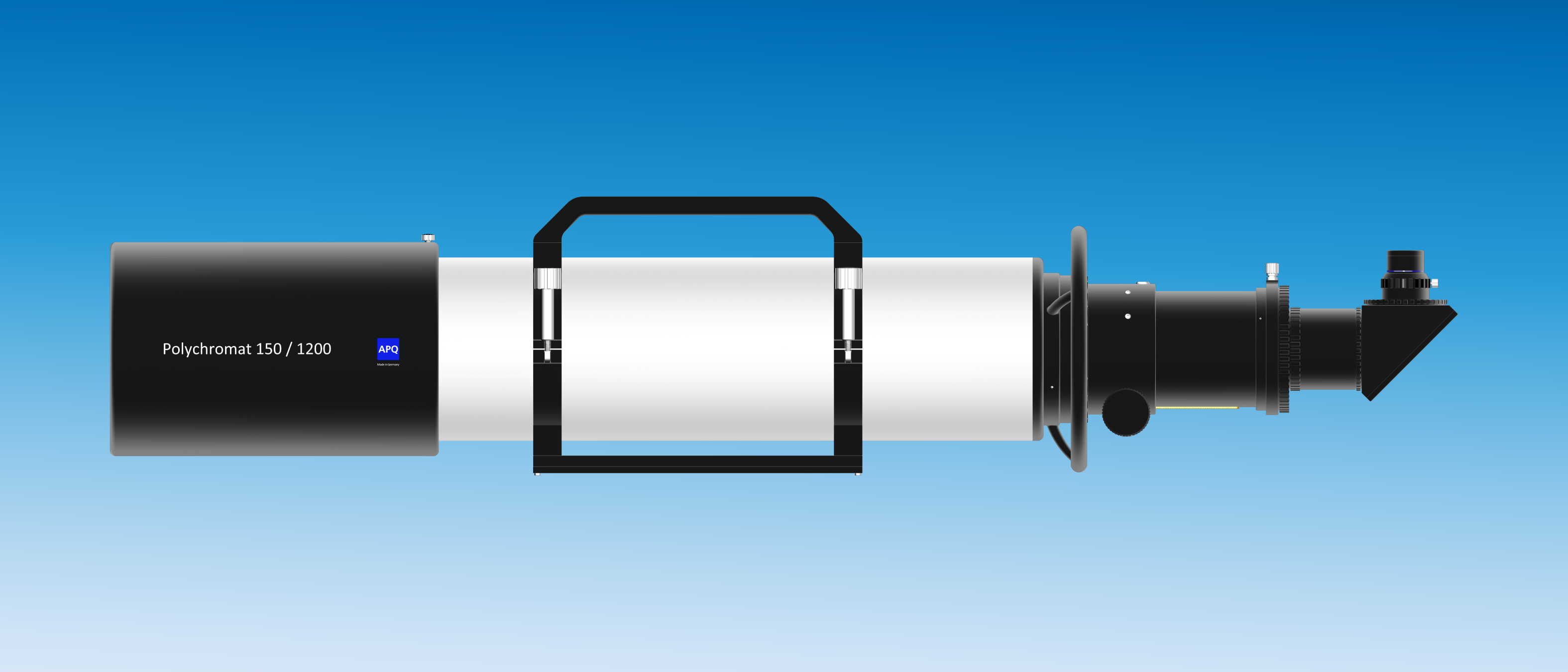
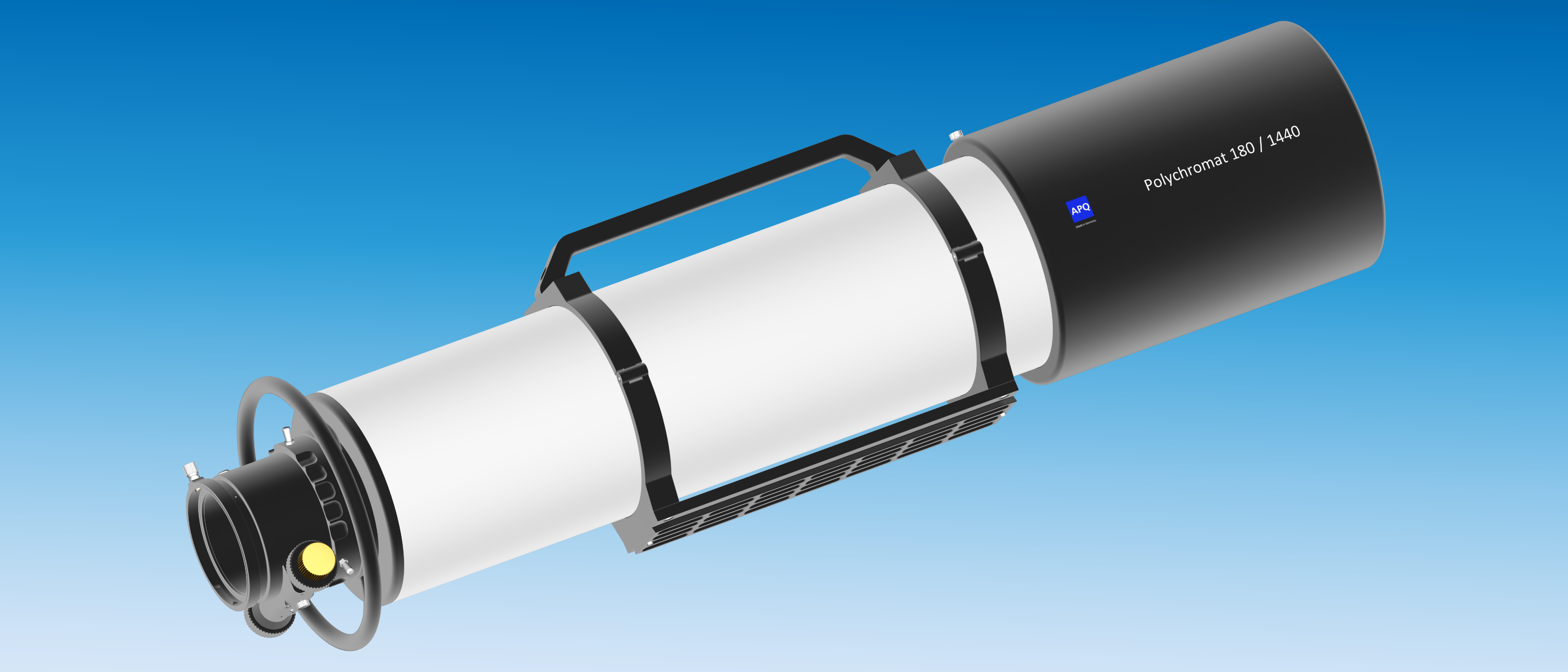
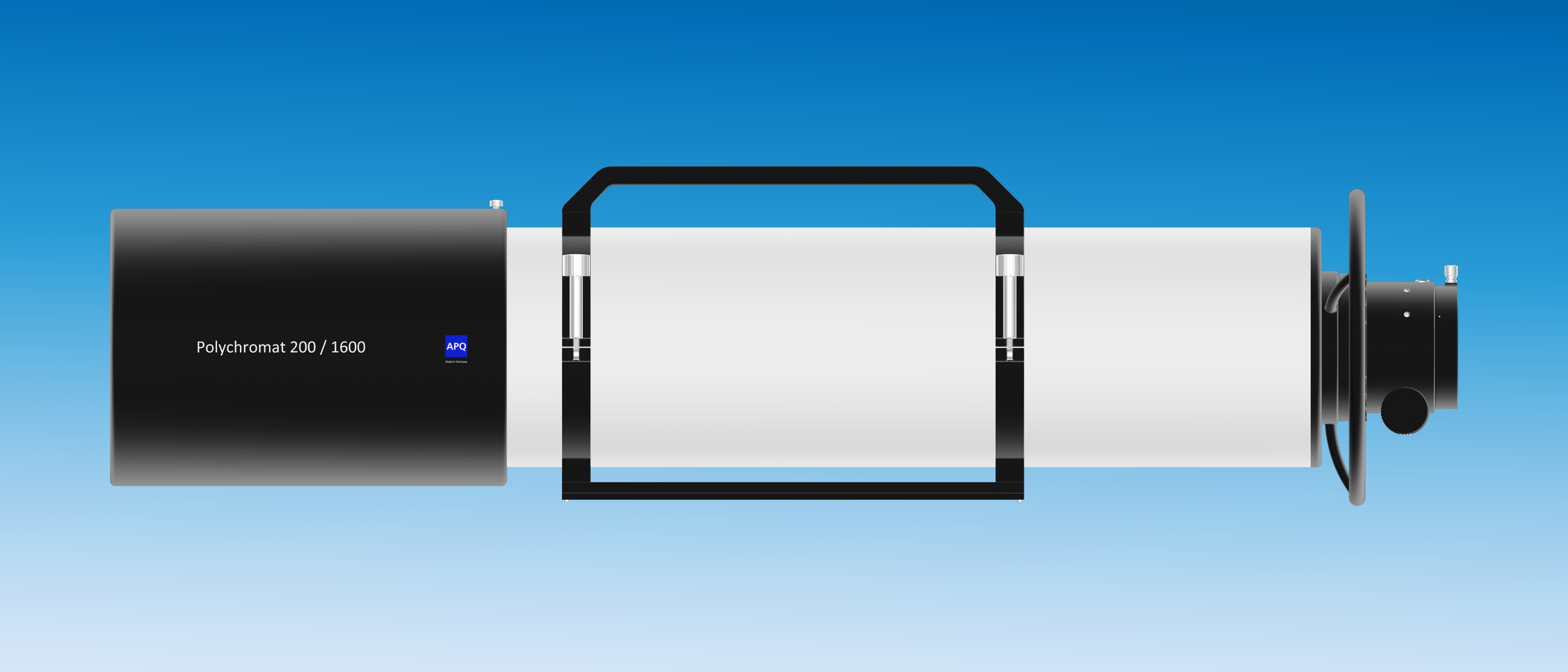
APQ Fluorite Polychromats
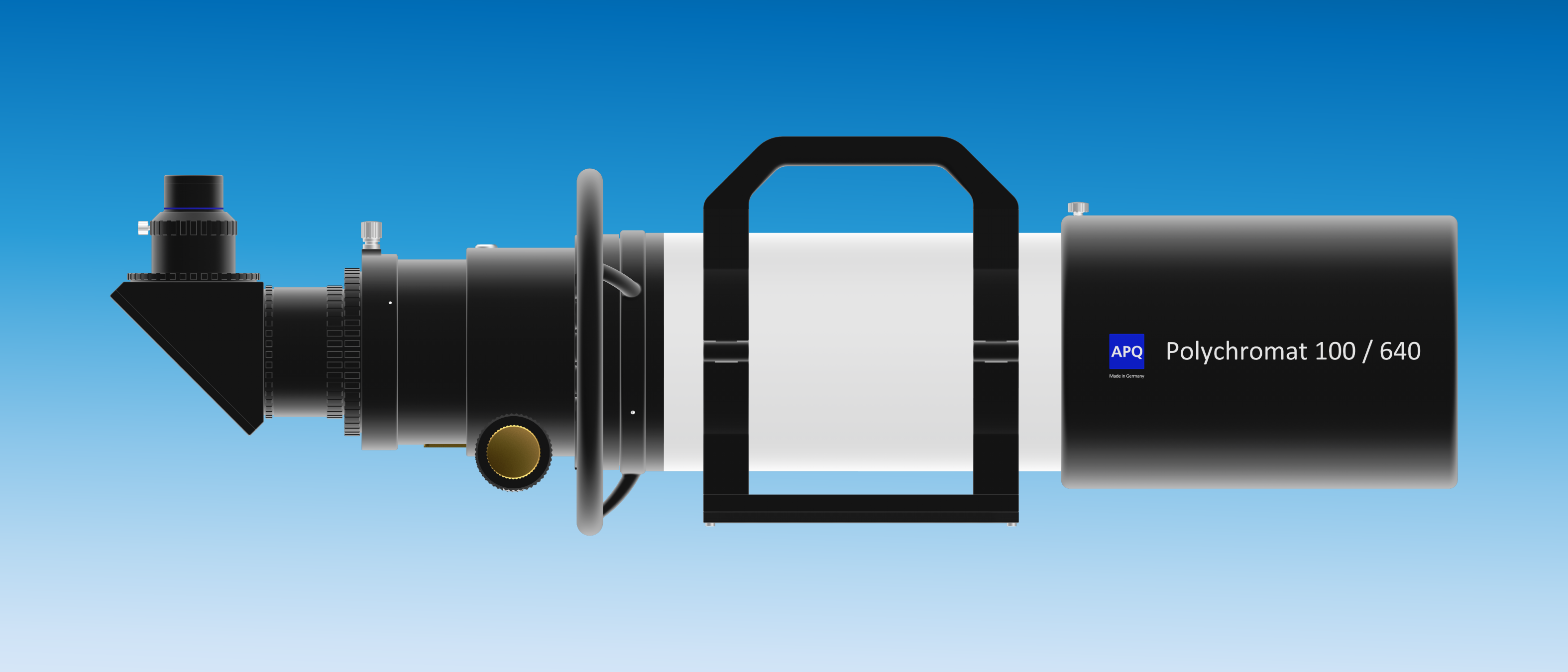
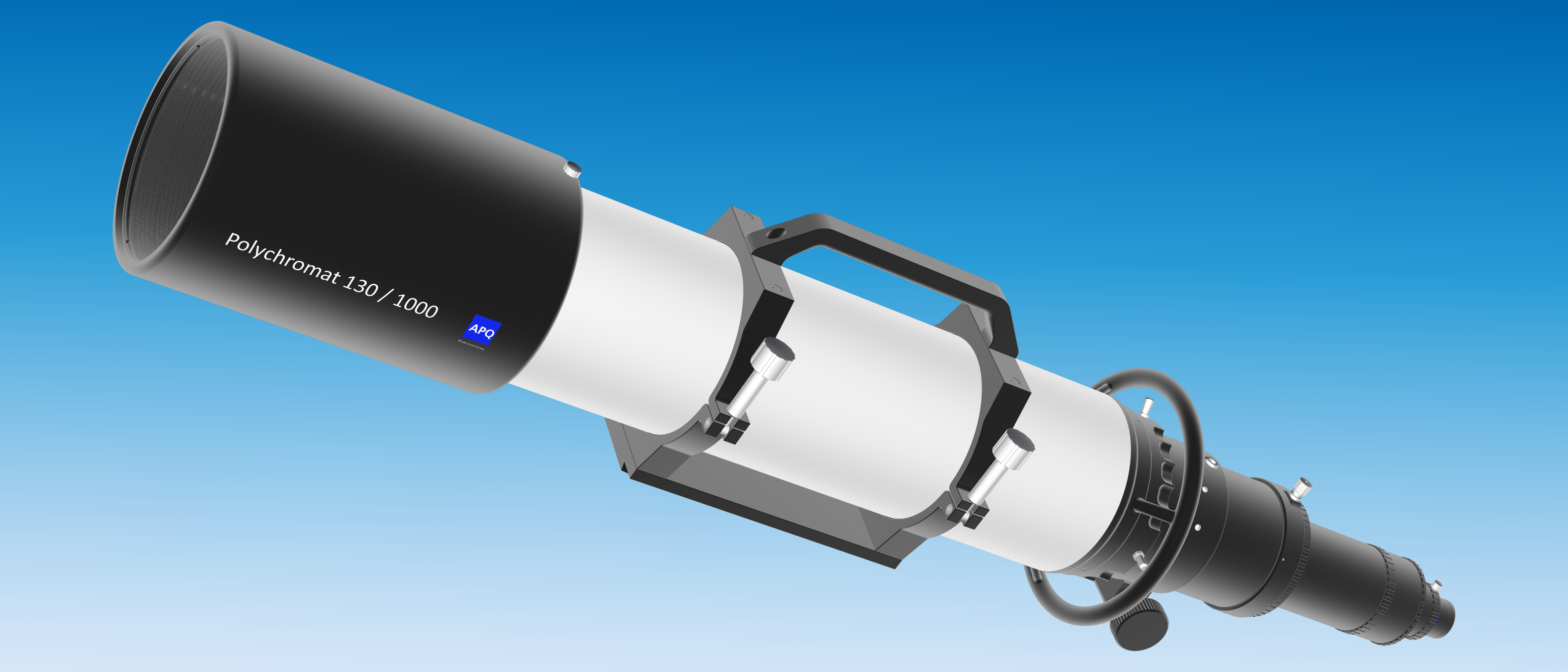
Our development and manufacturing program focuses on the newly developed Fluorite Universal Polychromats and Fluorite Wide Field Polychromats, which provide substantially broader chromatic correction than conventional doublet and triplet apochromats.
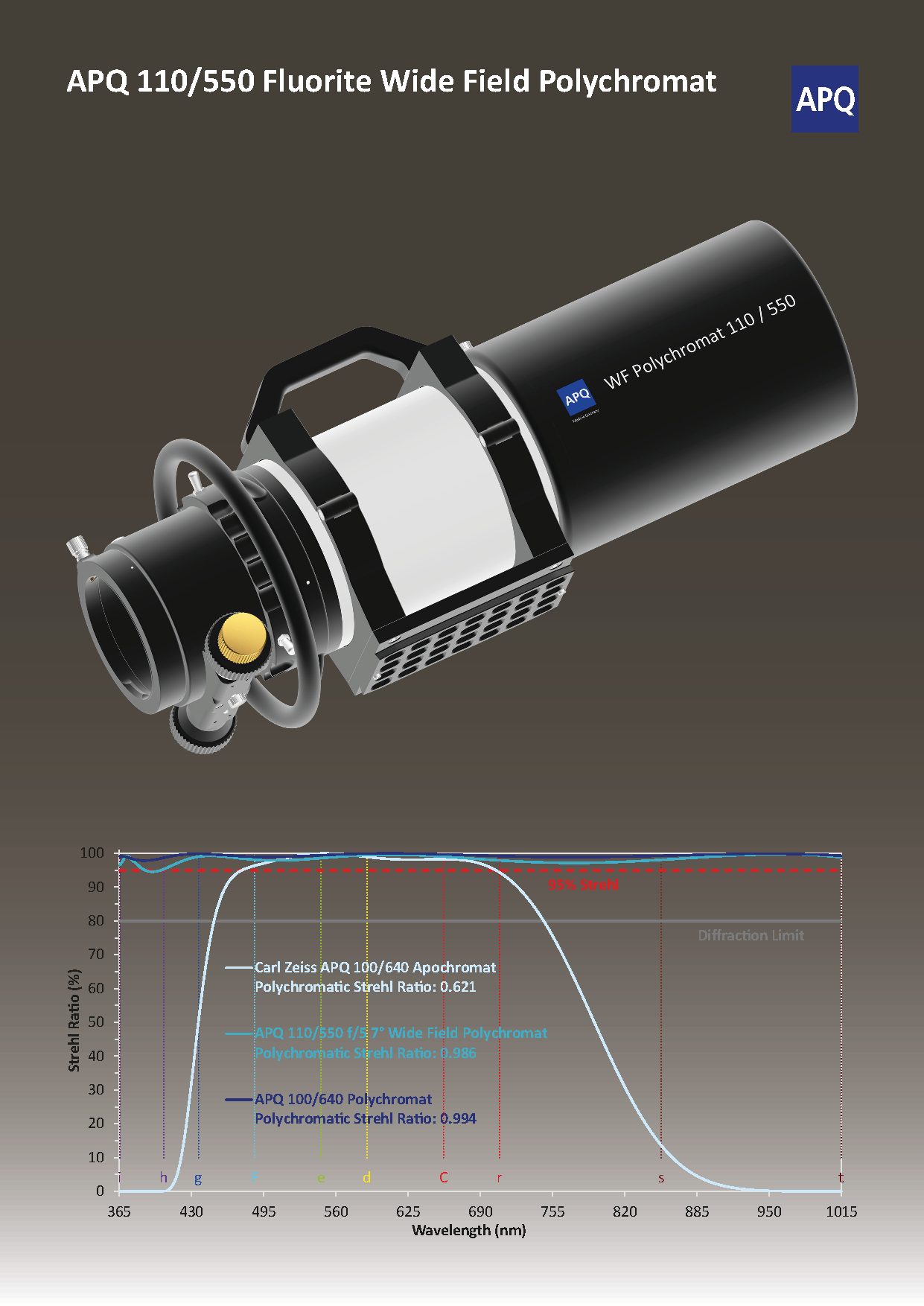
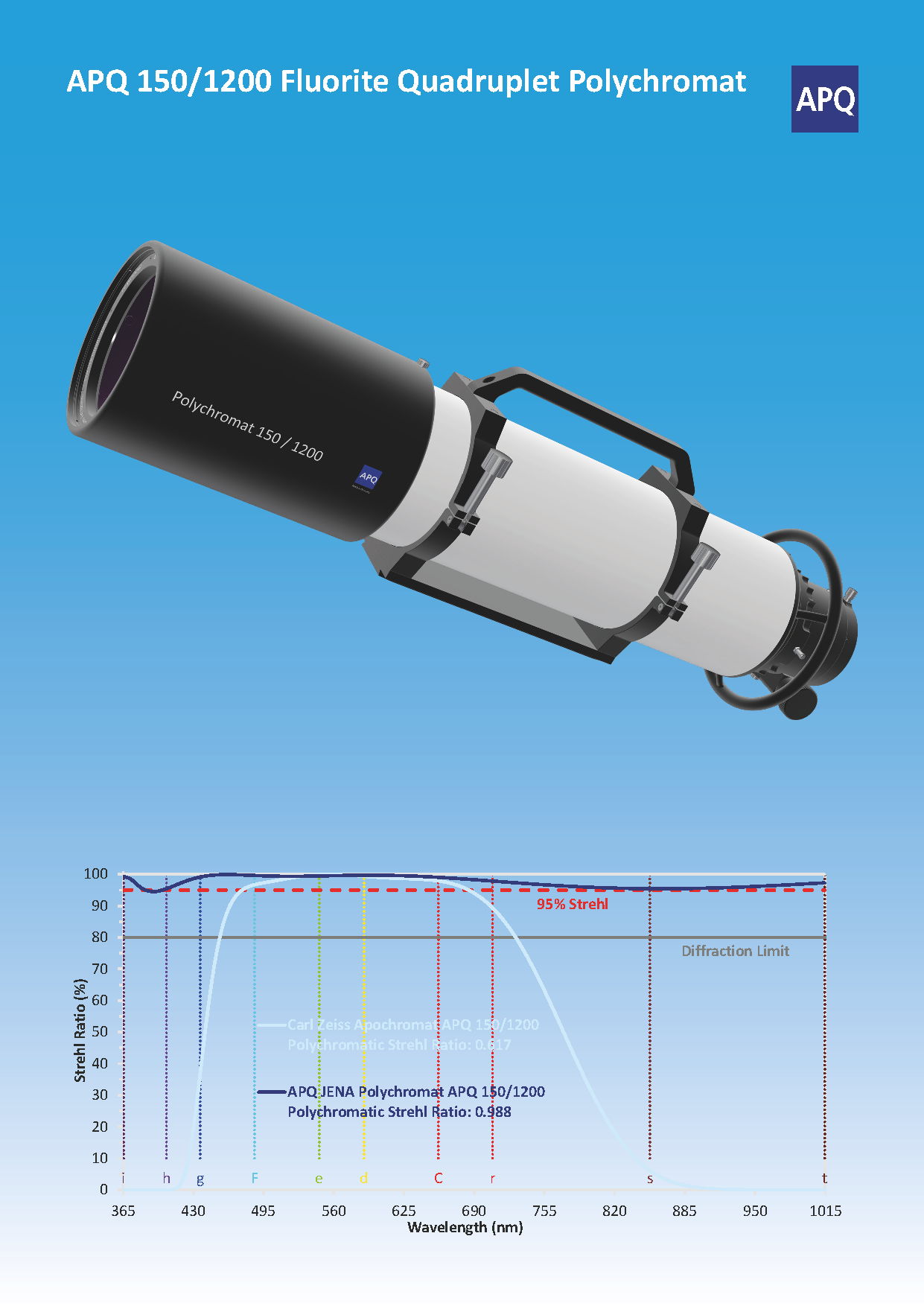
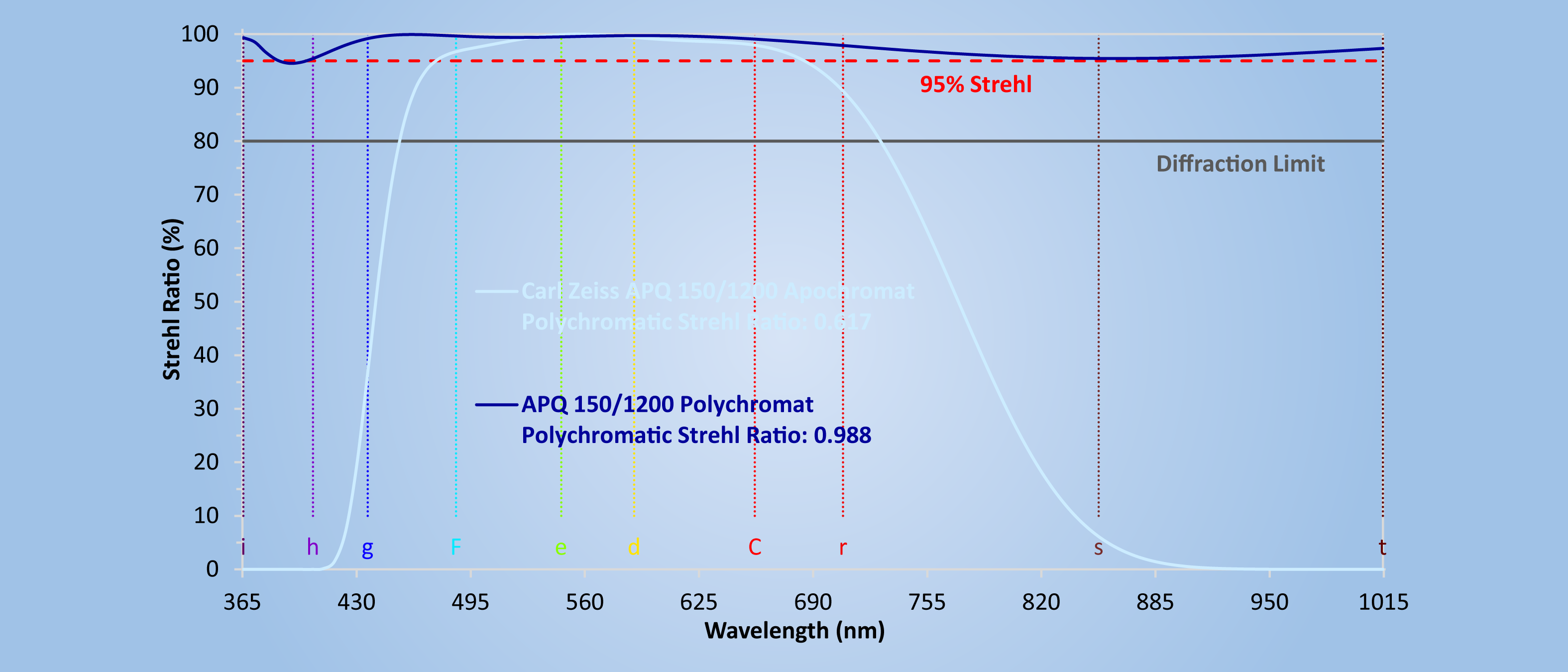
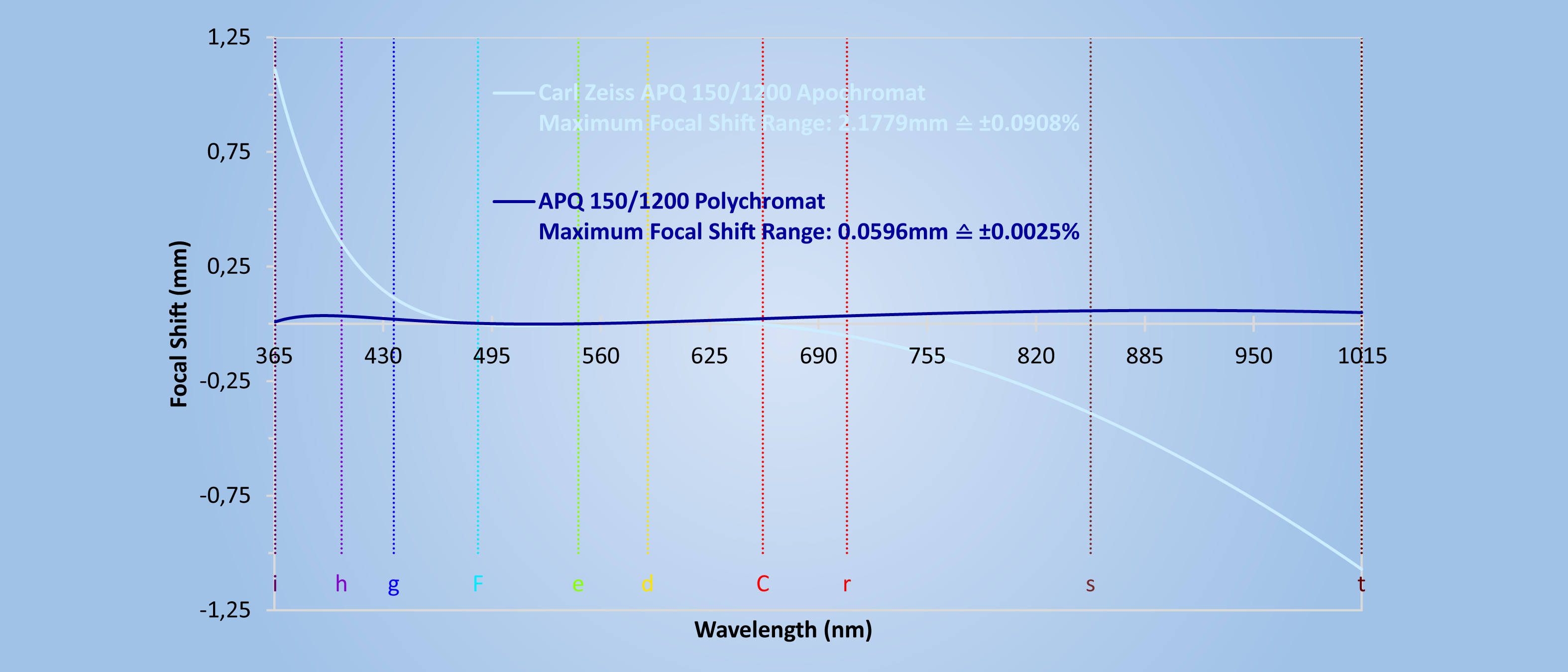
Both optical designs are defined by their polychromatic correction, which delivers diffraction-limited image quality across the spectral range from 365 nm (UV) to 1014 nm (IR). This benefits both visual observers and, in particular, astrophotographers.
With these systems, APQ JENA is bringing the Polychromat concept to the broader astronomical community.
Use in science and industry
These systems also enable new applications in industrial research, science, optronics and environmental technology.
APQ Technology
Polychromatic correction
Thermal compensation
Wide Field optical systems
Benefits for visual observation
Unlike most apochromats, the Strehl ratio does not fall toward or below the diffraction limit at the edges of the visual spectrum.
The Polychromats produce bright, crisp images with very low chromatic aberration, astigmatism, coma, spherical aberration and spherochromatism; their performance approaches the theoretical resolution limit.
Advantages for astrophotography
The APQ Fluorite Quadruplet Polychromats are designed to exploit the full UBVRI spectral range of modern CCD and CMOS sensors.
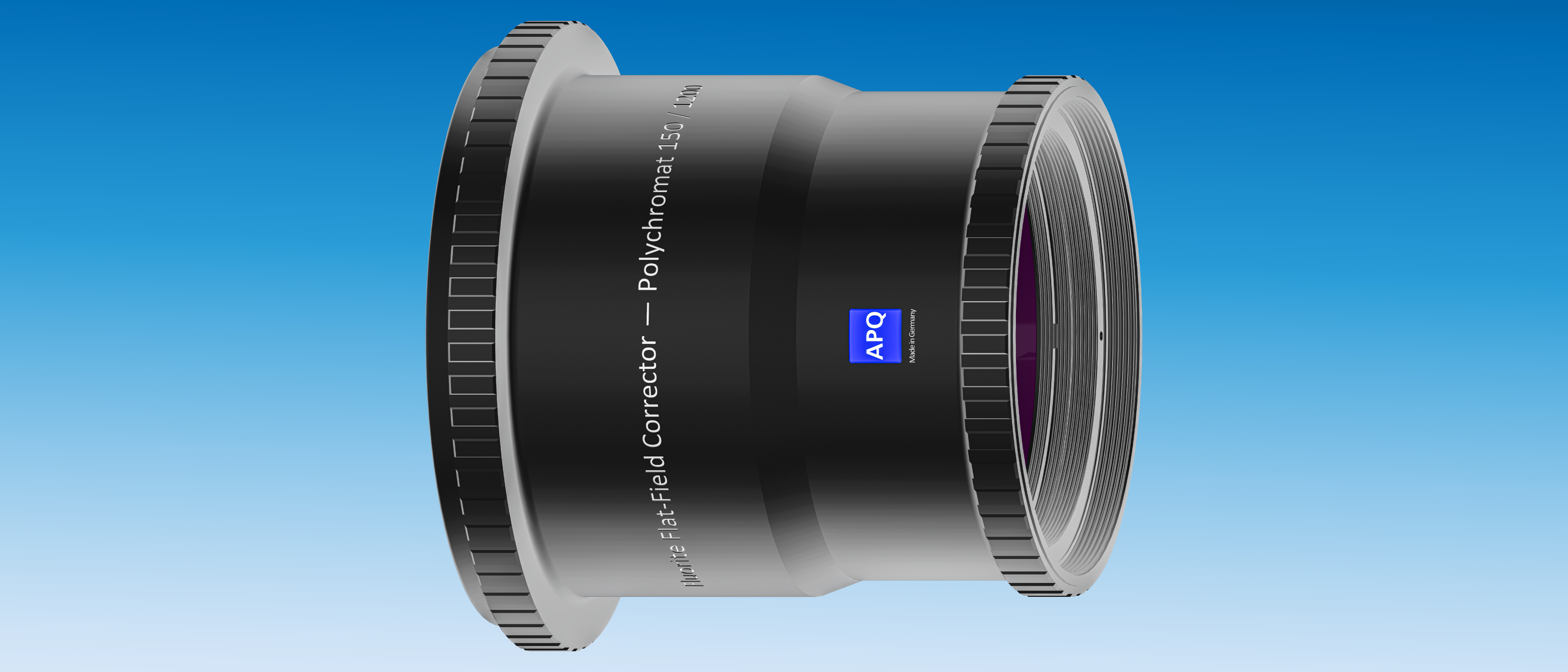
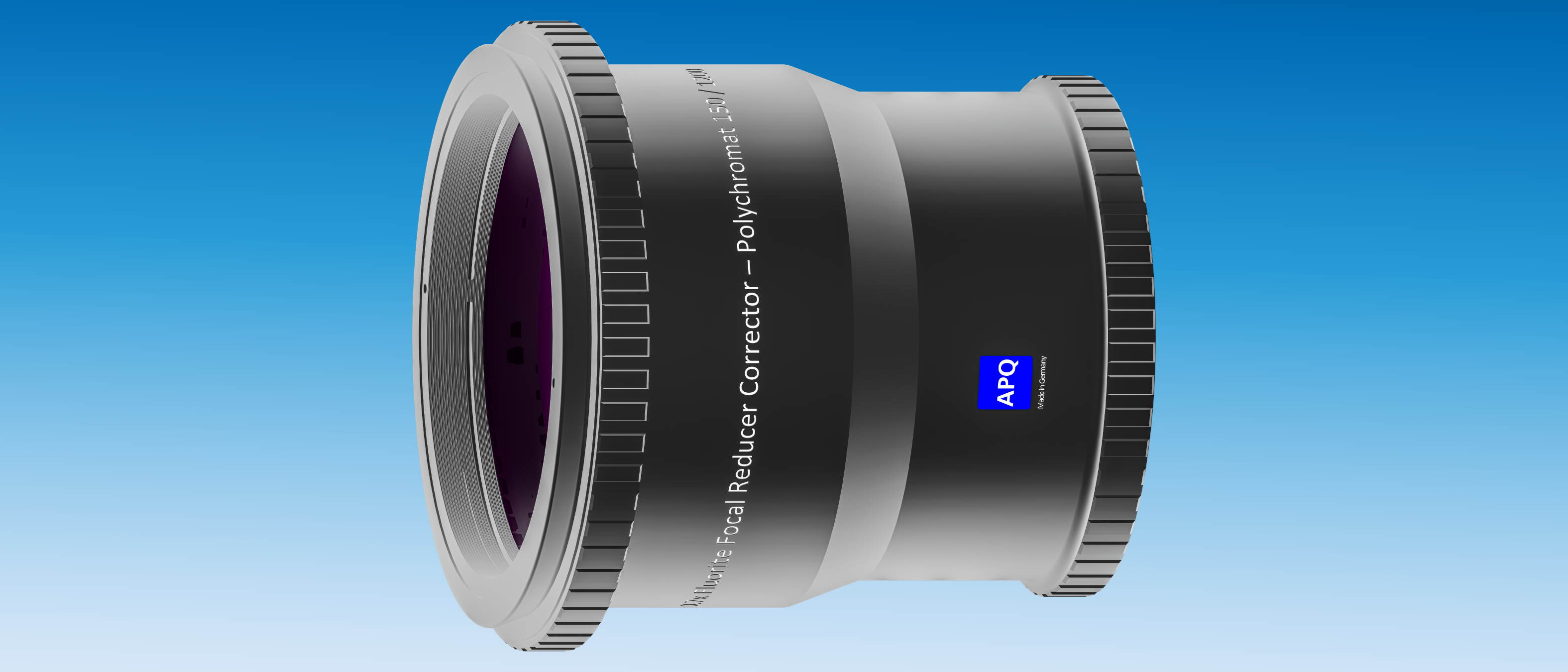
With the polychromatic Field Correctors and Focal Reducer Correctors – each specifically designed for its Quadruplet Polychromat and incorporating CaF₂ elements – diffraction-limited correction is maintained.
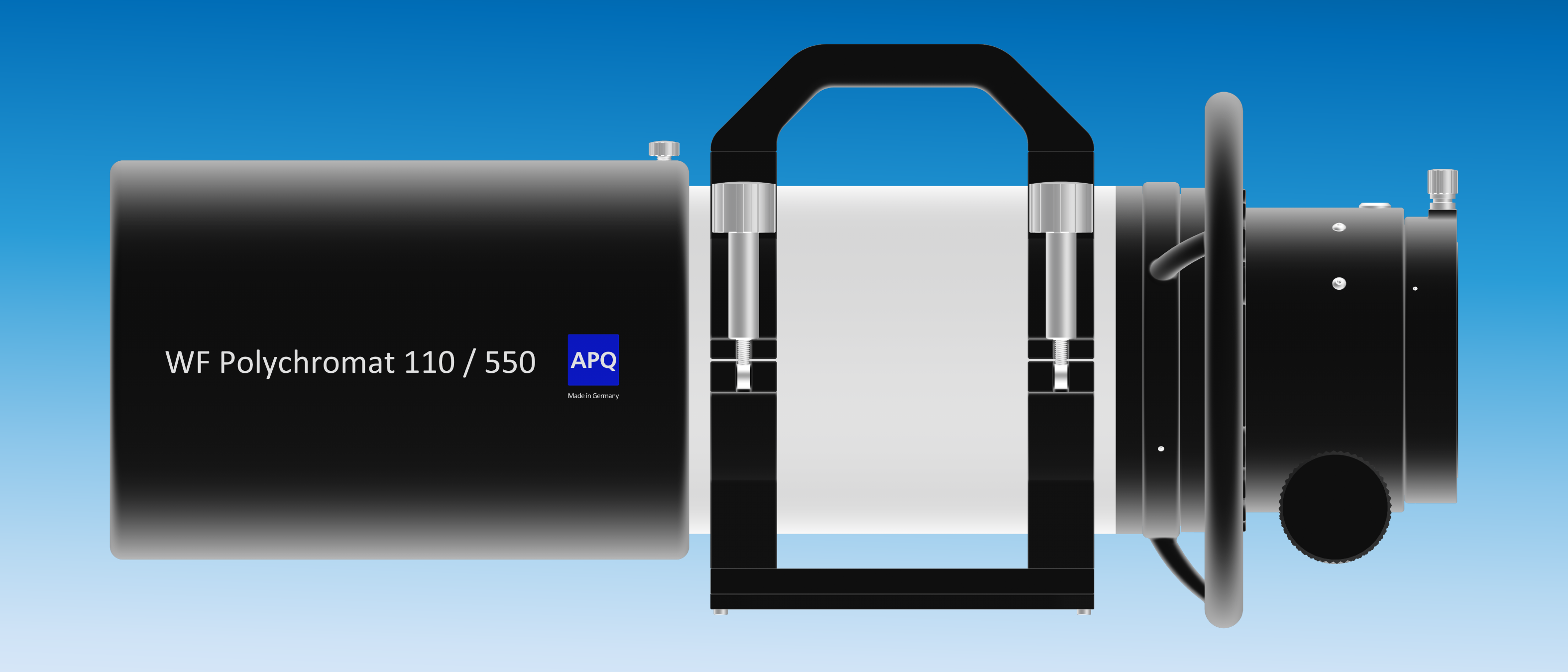
The newly developed APQ Wide Field Polychromats incorporate a dedicated focal reducer corrector and offer focal ratios from f/4 to f/6.
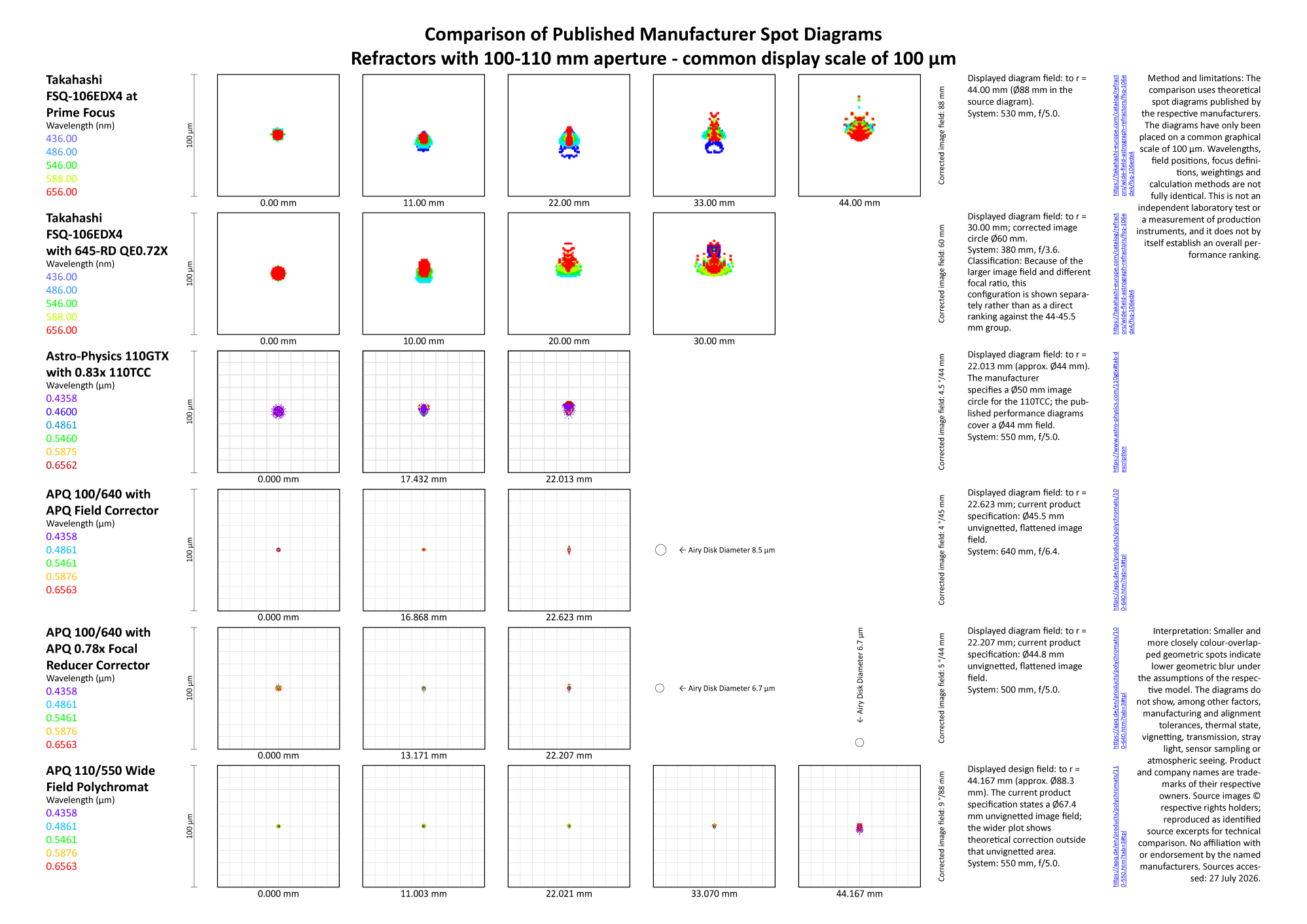
Their large, flat image fields remain corrected to the edge. This level of correction cannot be achieved with separate flatteners or reducers and supports, for example, the use of IMX461 and IMX411 CMOS cameras.
By making structures accessible in the UV and IR that are not visible in the conventional visual range, these systems open up additional fields of research and observation.
Latest at APQ
September 19, 2026 – APQ Wiki – Optics and Telescope Technology
The new APQ Wiki explains 175 technical terms from technical and astronomical optics with definitions, formulas, schematic diagrams, cross-references, and literature references.
Learn more
Open APQ Wiki